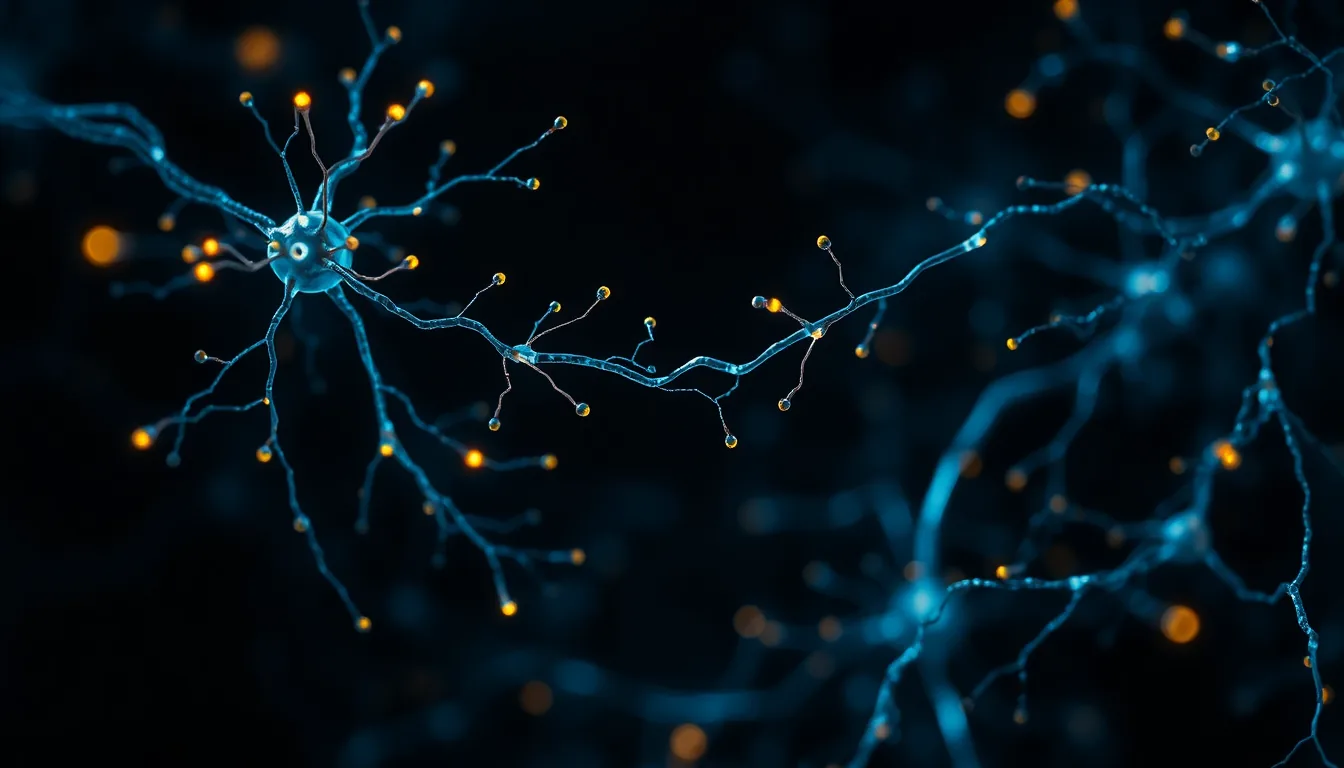
Neuroscientists have discovered that the 90% of brain signals typically ignored as "noise" can predict human behavior with equal or even greater accuracy than the strongest 10% of signals.
The Research
In a study published in Nature Human Behavior on April 17, 2026, researchers from Yale School of Medicine analyzed brain imaging and behavioral data from over 12,000 participants across four major U.S. datasets. Led by Brendan Adkinson, PhD, an MD-PhD student working in the lab of senior author Dustin Scheinost, PhD, the team investigated whether signals discarded during standard neuroimaging analysis could reveal meaningful insights.
Researchers ranked all brain connections from strongest to weakest association with behavioral outcomes, dividing them into 10 non-overlapping groups. Group one contained the top 10% of connections—what scientists typically focus on—while groups two through ten contained the remaining 90% usually dismissed as noise.
The team built 10 separate prediction models, one for each group. They found that models using lower-ranked connections (groups two through nine) consistently achieved prediction accuracy similar to models using the top 10% of connections. In some cases, models built on these "weaker" connections performed even better than those trained on the strongest signals.
"To our surprise, even when we completely excluded the networks people usually rely on to predict behavior, we still achieved nearly the same level of accuracy using everything that's typically left behind," said Adkinson.
Why It Matters
This research reveals that predictive information is widely distributed throughout brain connections rather than concentrated in just the strongest signals. The study proves there are multiple, non-overlapping networks capable of predicting the same behavior, suggesting the brain has significant redundancy and "functional flexibility."
For mental health conditions like depression, different individuals may rely on entirely different neural pathways to arrive at the same behavioral outcome. This means therapeutic approaches shouldn't be limited to targeting only the "top" networks. Focusing on these overlooked circuits could provide breakthroughs for patients who are "treatment-resistant" to current therapies.
The findings challenge the assumption that high statistical strength equals higher biological relevance. As Adkinson notes, "Many studies that rely on techniques like feature selection—which simplifies the brain down to a narrow slice—might only uncover a small part of the true neurobiology that underlies a given behavior."
What You Can Do
Understanding that your brain has multiple pathways for the same function can change how you approach cognitive improvement. If one learning method doesn't work for you, try another—your brain might simply be using different neural connections. When practicing new skills, vary your approach to engage different brain networks. Recognize that cognitive strengths and weaknesses might reflect which neural pathways you naturally favor rather than fixed limitations.
Source: Neuroscience News
Curious about your own brain? Take our free adaptive IQ test or try 306 brain training levels.