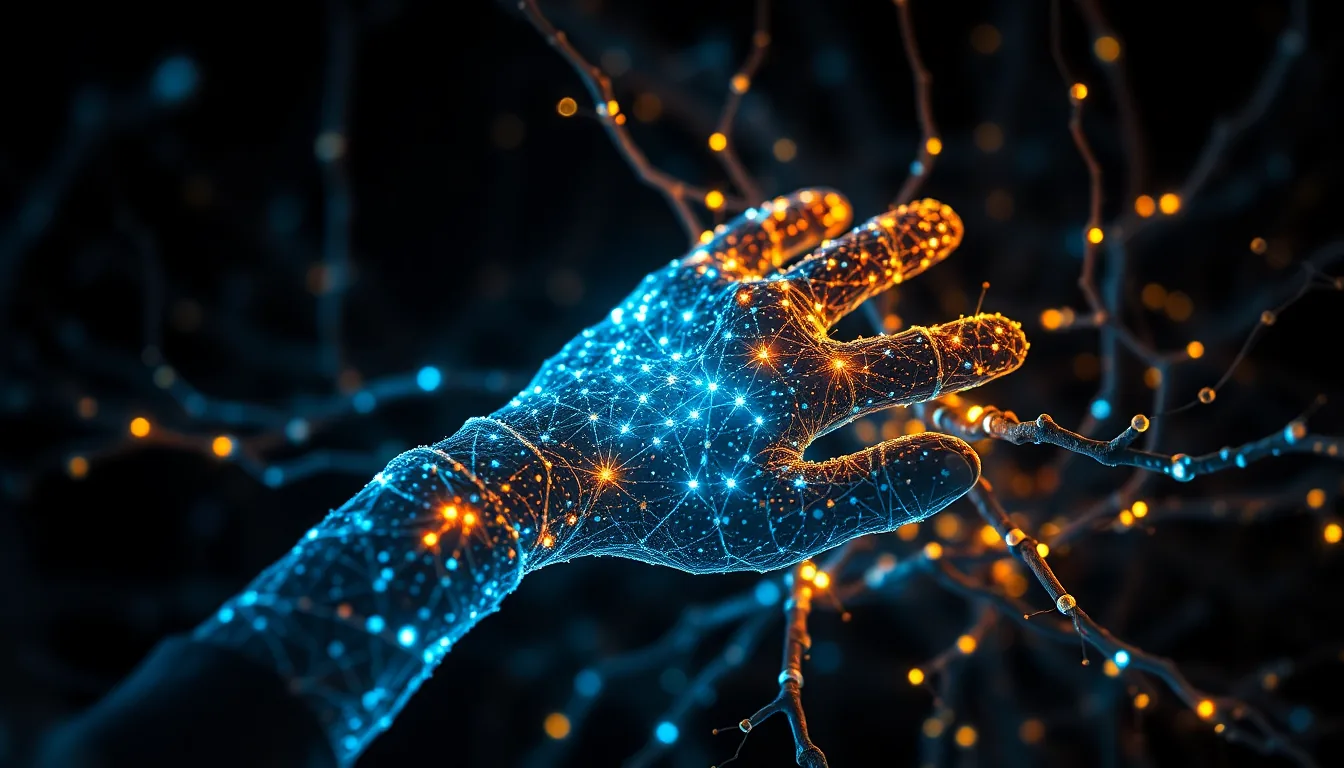
A new soft, pneumatic exoskeleton glove developed at the Technical University of Munich (TUM) can restore grasping ability in paralyzed hands by reading faint electrical signals from forearm muscles. The system achieved 97% reliability in predicting a user's intended movement, allowing an ALS patient to pick up a fork and feed himself for the first time in four years.
The Research
Led by Dr. John Nassour and Nicolas Berberich at TUM's Chair of Cognitive Systems, the glove is made of affordable fabric with 13 air cushions that inflate through micro-tubes to bend fingers and rotate the wrist. Forearm sensors capture electromyogram (EMG) signals, which are decoded by machine learning algorithms to infer the user's intended grasp. The system was co-developed with an ALS patient who retained only partial control of his thumb's first joint. After just five minutes of training with a thumb-controlled video game, he could manipulate small blocks and hold a fork for the first time in four years. The team also included anti-drop safety: motion sensors detect arm transport and lock the grip until the object is set down, preventing accidental drops.
Why It Matters
This innovation is not just for ALS patients. The researchers plan to extend the glove to help stroke survivors, motorcycle accident victims with nerve damage, and people with flaccid paralysis or polyneuropathy. Because the glove is made from low-cost materials—Dr. Nassour hand-sewed the fabric prototype—it could be accessible to low-income families, unlike expensive six-figure exoskeletons. For anyone curious about cognition, this study highlights how machine learning can amplify the brain's residual signals, offering hope that even faint neural activity can be harnessed to restore function. It also shows the power of neuroplasticity and biofeedback: brief training can dramatically improve control.
What You Can Do
While this is a medical device, you can train your own brain-muscle coordination with simple exercises. Try practicing fine motor tasks like threading a needle or playing a musical instrument—these strengthen the neural pathways between your brain and hands. For a more targeted cognitive workout,
Source: Neuroscience News
Curious about your own brain? Take our free adaptive IQ test or try 306 brain training levels.