Researchers have redefined how light is delivered to the brain, creating a new imaging platform that can track the electrical activity of nearly 200 neurons simultaneously at record speeds and depths. The technology, called FlatMux, was developed by a team at Rockefeller University and published in Nature Methods.
The Research
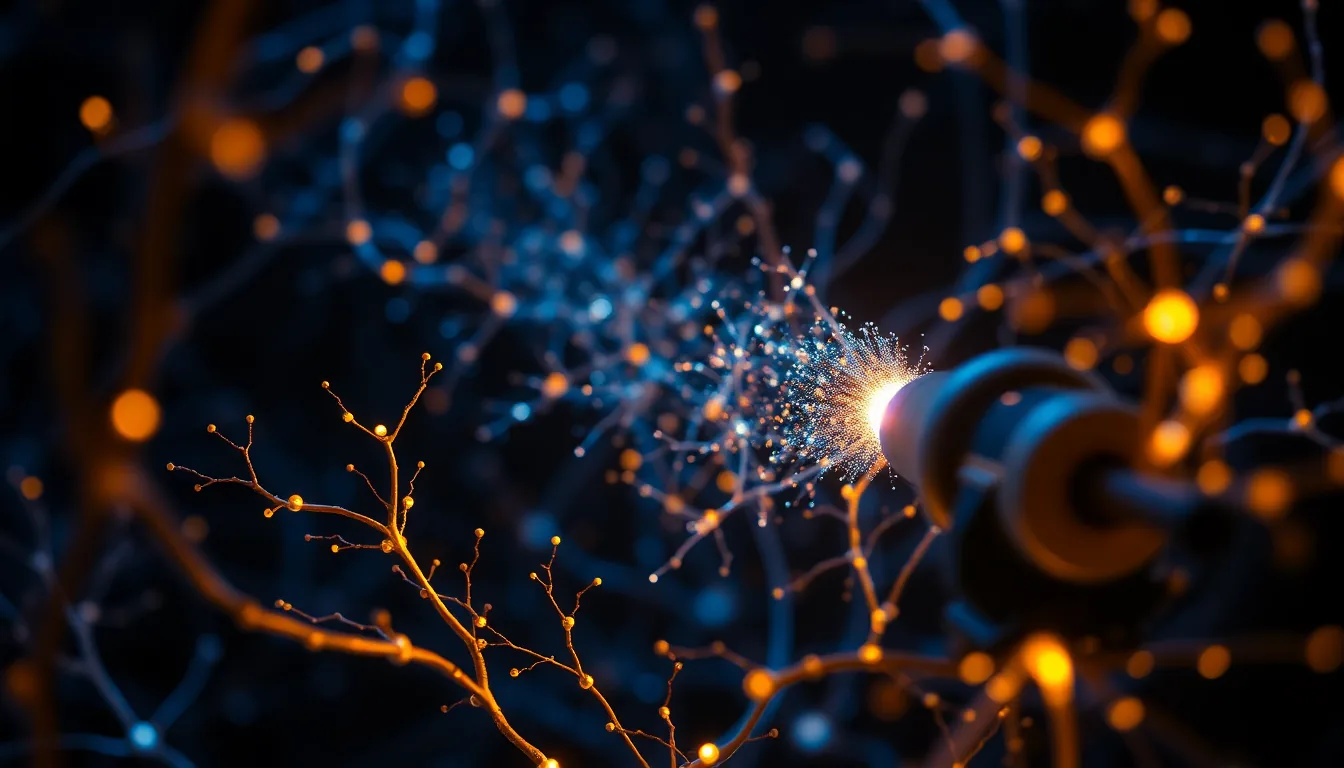
Led by Alipasha Vaziri, head of the Laboratory of Neurotechnology and Biophysics at Rockefeller, the team engineered a two-photon voltage imaging platform that captures real-time electrical signals from neurons in living brain tissue. Traditional methods like calcium imaging are slow and indirect, measuring calcium surges rather than the actual electrical impulses. FlatMux overcomes this by using genetically encoded voltage indicators (GEVIs) that fluoresce in response to voltage changes, allowing direct measurement of neural firing.
The key innovation is in the light delivery. Instead of using mechanical laser sweeping, which creates trade-offs between laser power, tissue heating, and signal sensitivity, FlatMux uses an optical cavity to split a laser beam into precisely timed pulses. This delivers 150 million samples per second across the sample, minimizing heating while maximizing photon yield per neuron. The result: frame rates up to 2,000 Hz at depths of 500 micrometers, recording from nearly 200 neurons across single or multiple cortical layers in awake, head-fixed mice.
The system can even detect sub-threshold synaptic signals—faint voltage fluctuations that occur before action potentials—enabling researchers to map functional connectivity and observe parallel computation across neural networks as animals engage in sensory behavior.
Why It Matters
This technology opens a new window into how the brain processes information. By watching the electrical activity of many neurons simultaneously, scientists can begin to understand how cognition emerges from distributed networks rather than single neurons. For anyone curious about their own brain, this research underscores that our cognitive abilities—attention, memory, decision-making—depend on rapid, coordinated activity across millions of cells. Tools like FlatMux may eventually lead to better diagnostics for neurological conditions where network communication breaks down, such as epilepsy or Alzheimer's disease.
What You Can Do
While you can't build a FlatMux at home, you can support your brain's network by engaging in cognitively stimulating activities. Challenge your neural circuits with puzzles, learn a new skill, or take our free adaptive IQ test to get a baseline of your cognitive strengths. Regular brain training may help maintain the speed and efficiency of your neural connections.
Source: Neuroscience News
Curious about your own brain? Take our free adaptive IQ test or try 306 brain training levels.