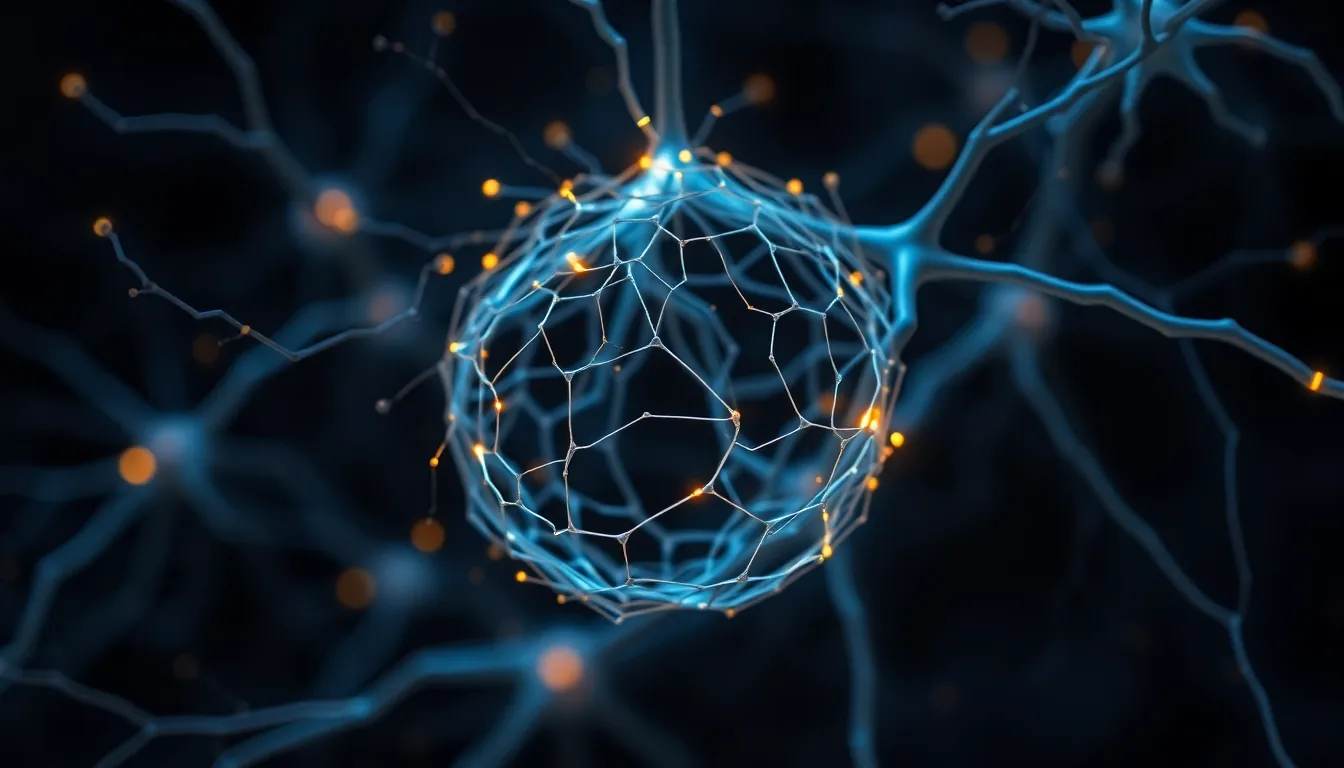
A new brain-inspired learning mechanism harnesses the power of oscillatory synchronization — the same rhythmic coordination seen in real neural circuits — to improve artificial intelligence. Researchers have developed a 'spiking-by-synchronization' network (S2-Net) that uses time-delayed timing control to process information more like a human brain.
The Research
In a paper posted on arXiv (May 2026), researchers Tingting Dan and Guorong Wu modeled each cortical region or image pixel as a spiking neuron within a predefined connectivity scaffold. The network operates through iterative bottom-up and top-down interactions: low-level spatiotemporal information emerges from self-organized spiking, while a macro-scale oscillatory mechanism forms from past spiking activity over a finite memory window. Critically, the team used a time-delayed synchronization formulation — reflecting the brain's partial, transient synchronization rather than global phase-locking — to modulate heterogeneous neural spiking across a large distributed system.
The resulting S2-Net achieved promising results across neural activity decoding, energy-efficient signal processing, temporal binding, and semantic reasoning tasks. By embedding rhythmic timing as a control mechanism, the network processes information with fewer computational resources, mirroring the efficiency of biological brains.
Why It Matters
This research bridges neuroscience and AI by showing how cortical rhythms — brain waves like alpha and gamma — can inspire algorithms that learn with less data and energy. Understanding that your brain uses synchronized firing to bind sensory features (e.g., color and motion) into a unified perception helps explain why cognitive training related to timing and rhythm, such as musical practice or memory exercises, may sharpen mental coordination. The study also suggests that building AI that mimics these principles could lead to more human-like reasoning and adaptability.
What You Can Do
Boost your brain's natural rhythmic synchronization through activities that require precise timing: learn a musical instrument, practice rhythm games, or try meditation that focuses on breath timing. These evidence-based exercises may strengthen the neural coordination underlying attention and learning.
Source: arXiv q-bio.NC
Curious about your own brain? Take our free adaptive IQ test or try 306 brain training levels.