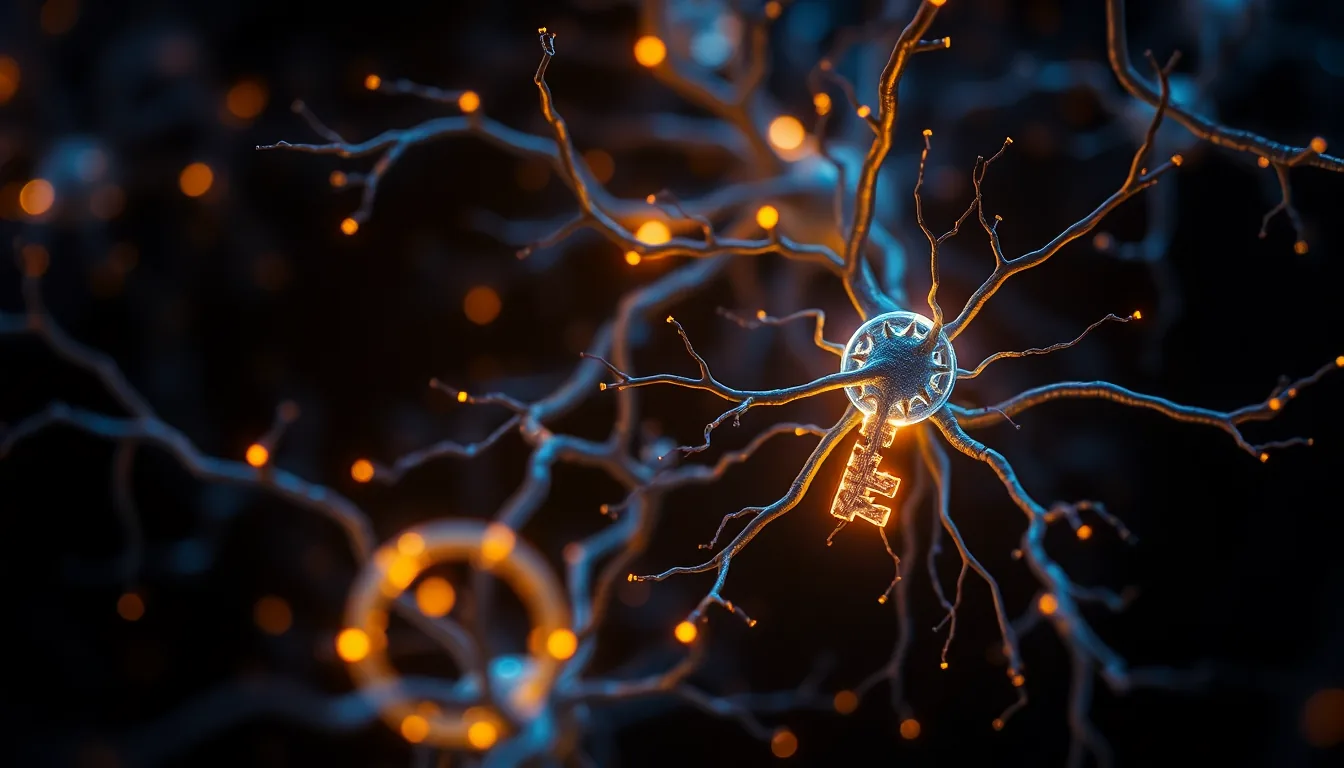
For decades, scientists assumed the brain learns by building new connections—like adding words to a blank page. But a new study from the Institute of Science and Technology Austria (ISTA) flips that idea on its head, at least for the hippocampus, the brain's memory and navigation hub. Researchers found that the newborn hippocampal network is actually overloaded with connections, and learning happens by pruning them down into an efficient map.
The Research: From Full to Streamlined
Led by Peter Jonas and former ISTA researcher Victor Vargas-Barroso, the team studied the CA3 region of the hippocampus in mice at three ages: early after birth (7–8 days), adolescence (18–25 days), and adulthood (45–50 days). Using the patch-clamp technique to measure electrical signals at individual synapses, along with advanced laser microscopy, they mapped the network's structure over time.
The results were clear: at day 7, connections were extremely dense and appeared almost random. By adulthood, the network had become sparser, more organized, and more efficient. The researchers call this a "pruning model"—the brain starts with a full slate, or tabula plena, and then optimizes by removing excess links.
Why It Matters for Your Brain
This "exuberant connectivity" may be key to how the hippocampus links different types of information—sights, sounds, smells—into a single memory. A newborn brain needs to rapidly form connections between far‑flung neurons; an initially dense network makes that possible. As we age, fine‑tuning these connections through pruning improves memory precision and cognitive efficiency.
For you, this means that learning isn't just about adding facts—it's also about letting go of irrelevant links to focus on what matters. The brain's ability to prune is just as important as its ability to grow.
What You Can Do
- Sleep enough: Pruning happens most actively during deep sleep. Aim for 7–9 hours a night.
- Challenge your memory: Learning new routes or practicing recall exercises can help guide your brain's pruning toward useful connections.
- Reduce overload: Too much scattered information may interfere with efficient pruning—focus on one thing at a time.
Source: Neuroscience News
Curious about your own brain? Take our free adaptive IQ test or try 306 brain training levels.