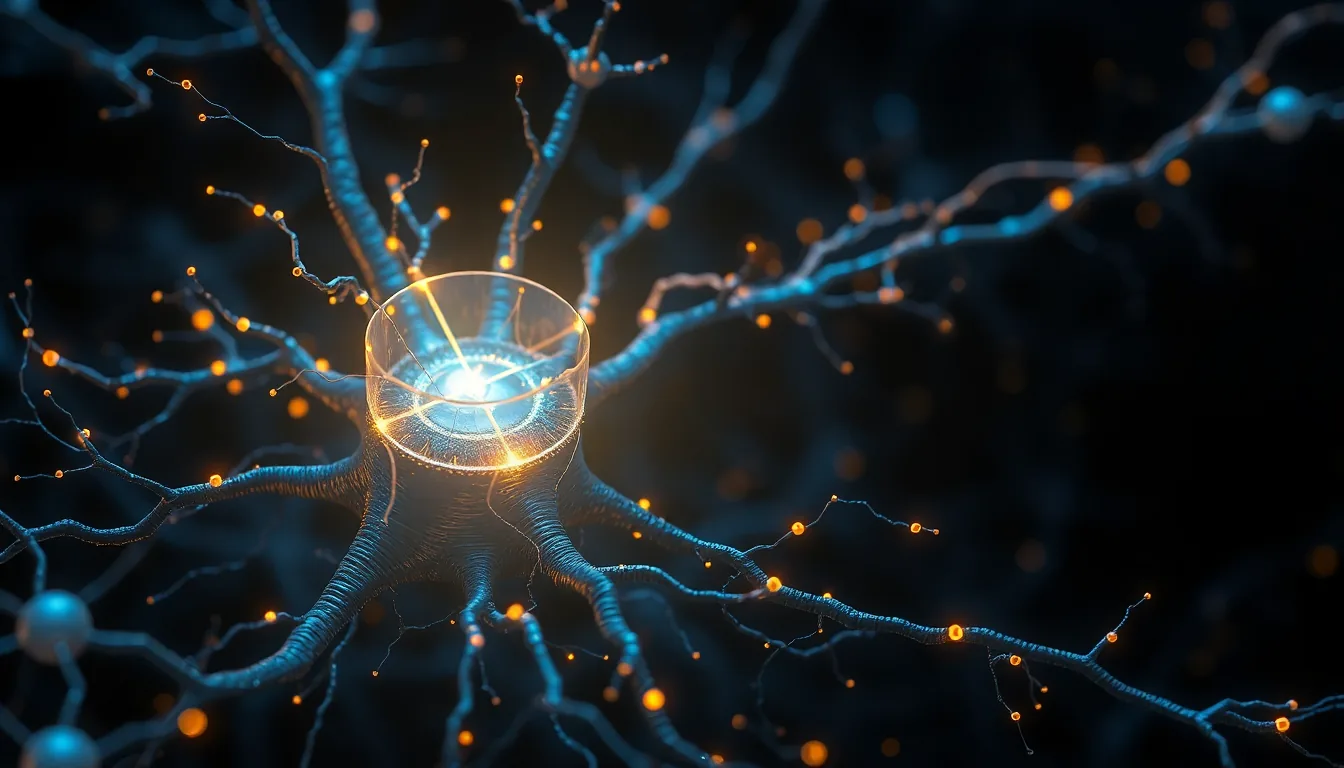
Scientists have identified a tiny cluster of neurons in an ancient brain region that acts as a built-in focus filter, helping the brain block out distractions and concentrate on what matters. When these neurons are temporarily switched off, mice become unusually distractible — a behavior reminiscent of ADHD — but regain normal focus as soon as the cells are reactivated.
The Research
Researchers at Johns Hopkins University, led by senior author Shreesh Mysore and lead author Ninad Kothari, published their findings on June 24, 2026 in Nature Communications. The team studied a network of inhibitory neurons located in the brainstem — an evolutionarily old region shared by all vertebrates, including birds, fish, and humans.
To test the neurons' role, the researchers designed an attention task for mice. The animals were trained to respond to visual cues on a screen while ignoring distracting cues appearing off to the side. When the brainstem neurons were temporarily inactivated using a targeted technique, the mice's performance plummeted. They began reacting to irrelevant distractions, similar to what is seen in attention-deficit/hyperactivity disorder (ADHD). Critically, when the neurons were reactivated the next day, the mice returned to normal focus, ignoring even strong distractions.
Control tests ruled out vision problems or movement difficulties; the specific impairment was in comparing competing information and selecting the most important signal. “This part of the brain is like an attentional selection engine,” Mysore explained.
Why It Matters
For decades, attention was thought to be primarily controlled by the prefrontal cortex, a region that is highly developed in humans and primates. Yet many animals without a robust prefrontal cortex — such as birds and fish — can also focus their attention. This discovery fills that gap by revealing an evolutionarily ancient attentional system in the brainstem. Understanding these neurons could lead to more precise treatments for attention disorders like ADHD and autism, as the brainstem circuitry is present in all vertebrates, including humans.
What You Can Do
While this research is in its early stages, you can support your own focus by practicing mindfulness meditation, which has been shown to strengthen attentional control networks. Additionally, minimizing multitasking and creating distraction-free environments can help your brain’s natural attention filter work better.
Source: ScienceDaily Mind & Brain
Curious about your own brain? Take our free adaptive IQ test or try 306 brain training levels.