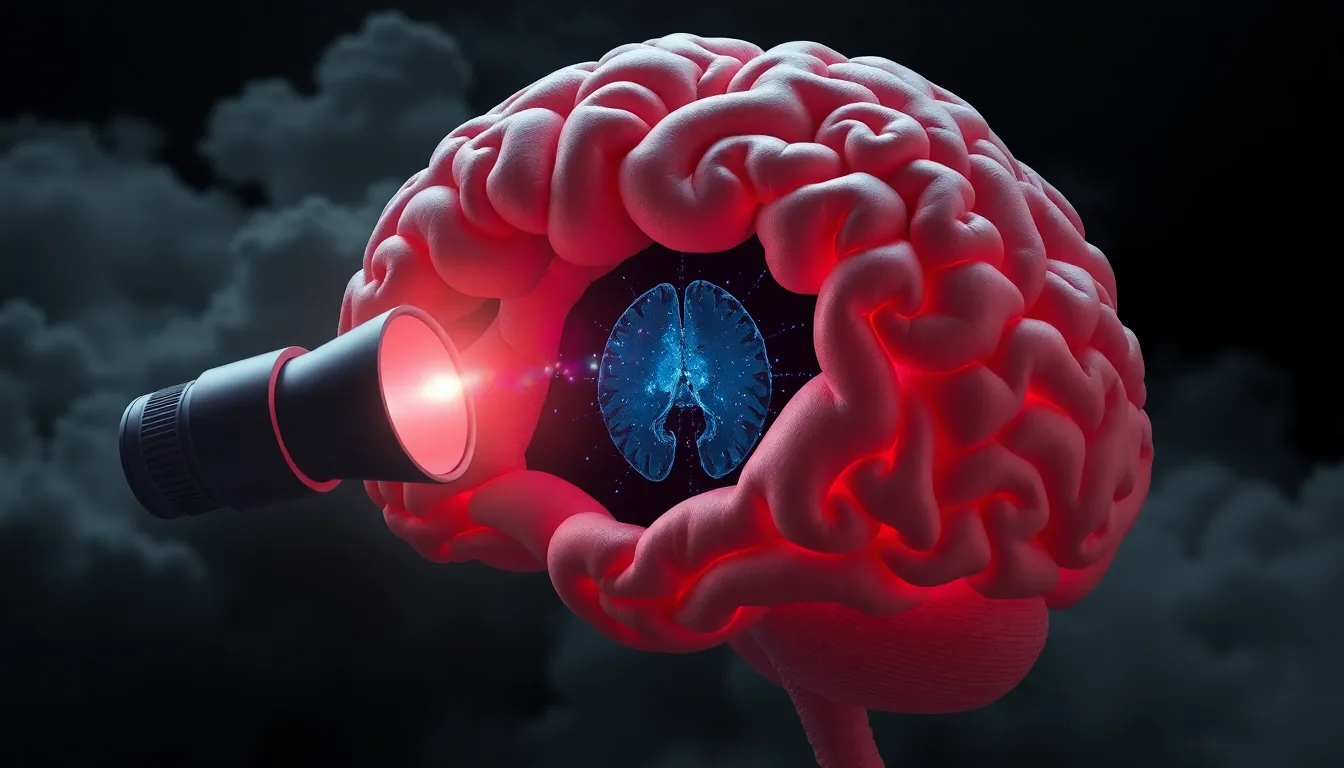
A new AI model can generate realistic brain activity patterns for cognitive tasks it has never encountered before. Developed by Sam Gijsen, Michał Łukomski, Marc-André Schulz, and Kerstin Ritter, the model uses a per-timestep conditioned diffusion transformer to create whole-cortex fMRI dynamics purely from language descriptions of tasks, with optional spatial priors. This advance, published on arXiv in June 2026, marks the first generative model capable of zero-shot generalization to unseen cognitive tasks, opening doors to counterfactual neuroscience.
The Research
The team trained their model on fMRI data from hundreds of cognitive tasks. By injecting compositional language descriptions and optional spatial priors in-context, the model learned to generate realistic brain dynamics for held-out task conditions. Testing on hundreds of unseen tasks, the model recovered region-specific recruitment patterns from language alone. When spatial priors were added, performance improved in regions where language alone degraded, while preserving compositional structure. The work demonstrates that generative models of neural time series can move beyond categorical conditioning, enabling compositional and zero-shot generalization for the first time.
Why It Matters
This breakthrough allows researchers to design and evaluate novel cognitive experiments in silico before running expensive and time-consuming empirical studies. For example, a neuroscientist could describe a new memory task and instantly see predicted brain-wide activation patterns, generating hypotheses to test. For the curious individual, it hints at a future where personalized brain models could predict how you might respond to different cognitive challenges, helping tailor brain training or education strategies to your unique neural fingerprints.
What You Can Do
While this technology is still in research labs, you can start exploring your own cognitive strengths and weaknesses today. Understanding your baseline abilities can help you choose brain training activities that target areas you want to improve. Try a validated cognitive test to get a snapshot of your current performance.
Source: arXiv q-bio.NC
Curious about your own brain? Take our free adaptive IQ test or try 306 brain training levels.