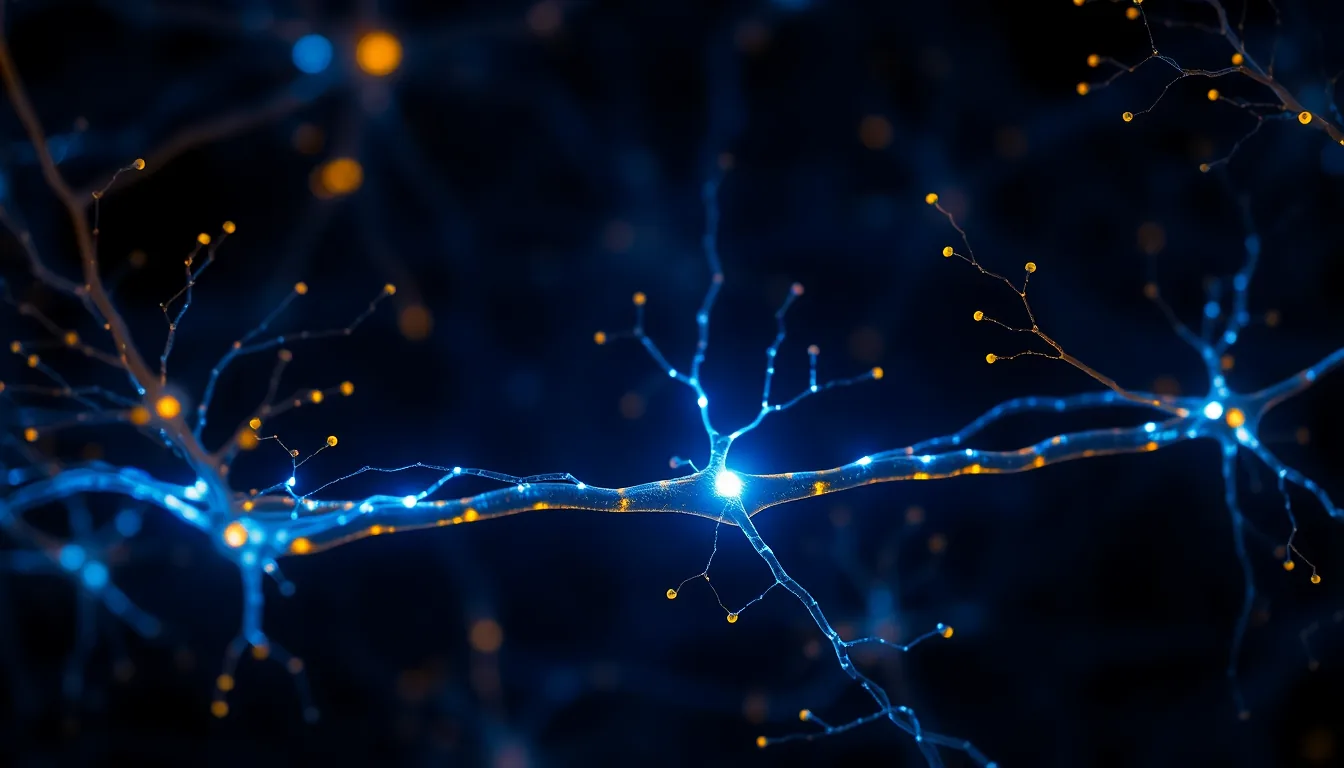
A groundbreaking new connectome maps every neural connection in an adult fruit fly's central nervous system, revealing that behavior may be driven more by local neural teamwork than by a central brain command center. Published on June 8 in Nature, the study is a collaboration between Harvard Medical School, Princeton University, and an international team.
The Research
The team, led by Rachel Wilson at HMS and Wei-Chung Allen Lee at HMS and Boston Children's Hospital, extended a previously published fruit fly brain connectome by adding the fly's nerve cord (the equivalent of our spinal cord). This is the first full brain-to-body wiring diagram for the fruit fly Drosophila melanogaster, which has about 160,000 neurons. Using electron microscopy and AI-assisted tracing, they mapped every neuron and synapse connecting the brain to the body.
When they analyzed the network, they discovered that many fruit fly behaviors, such as walking and flying, are directed by local circuits in the nerve cord rather than by a single central command area in the brain. "We can see all of the neurons and their connections as a complete unit for the first time," said Rachel Wilson. Co-first author Alexander Bates noted that nerve cord neurons are "some of the most useful" because they are tied to sensation and movement.
Why It Matters
This finding challenges the idea that complex behaviors require a centralized controller. Instead, intelligence and coordinated action may arise from distributed local circuits working together. For humans, understanding this principle could inspire new approaches in robotics, AI, and even therapies for neurological conditions. It also supports the view that our own brains may rely more on parallel processing than we realize.
What You Can Do
Train your brain's distributed processing by engaging in activities that require coordination of multiple senses and movements, such as learning to juggle, playing a musical instrument, or practicing a sport. These tasks strengthen connections across different brain regions, much like the fruit fly's local circuits.
Source: ScienceDaily Mind & Brain
Curious about your own brain? Take our free adaptive IQ test or try 306 brain training levels.