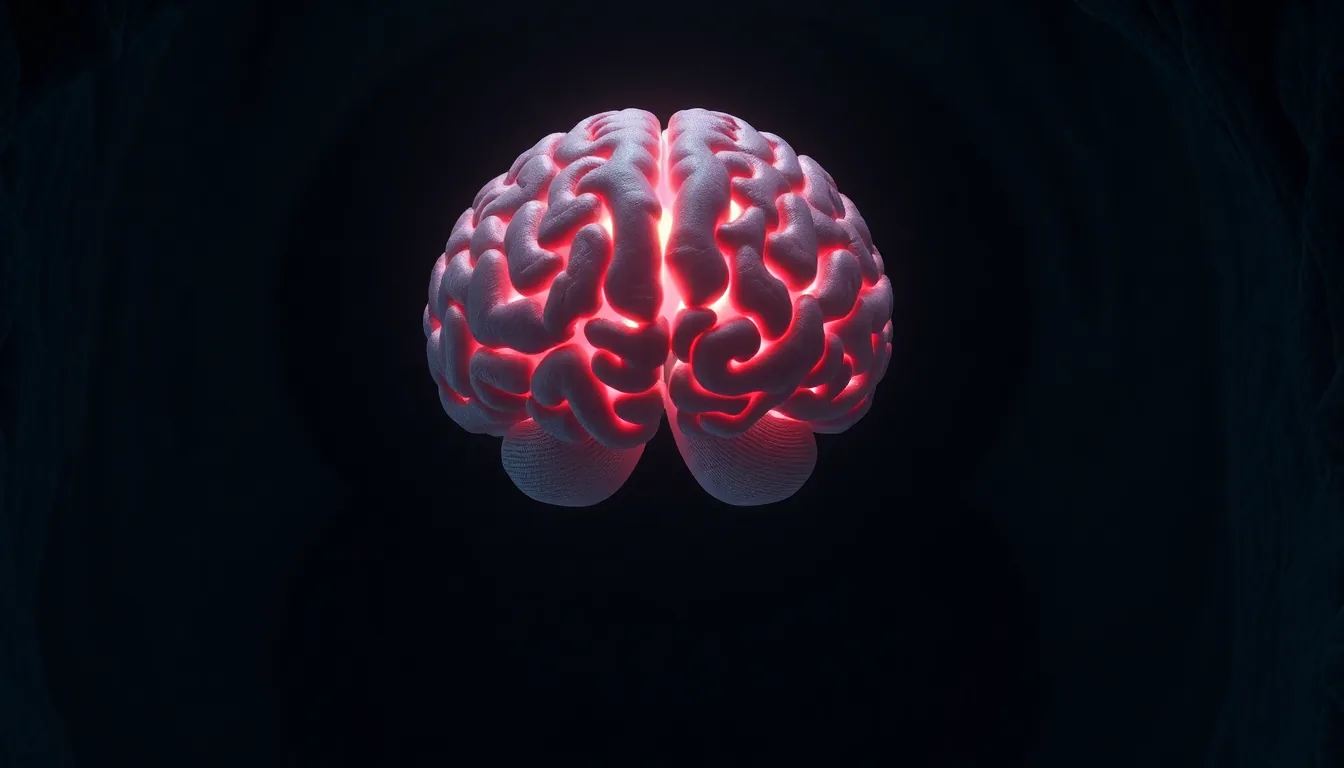
New research from Georgetown University reveals that with enough practice, the brain physically rewires itself, allowing learned tasks to become automatic and freeing up the prefrontal cortex for other activities — challenging the long-held belief that humans can only switch rapidly between tasks, not truly multitask.
The Research
Scientists at Georgetown University Medical Center, led by senior author Maximilian Riesenhuber, PhD, and first author Patrick Cox, PhD (now at Lehigh University), asked volunteers to sort thousands of morphed car images into two categories using a smartphone app. Over 5 to 10 weeks, participants completed more than 30,000 sorting trials. Before and after training, the researchers scanned their brains with fMRI and EEG.
Early in training, the sorting task primarily activated the prefrontal cortex — the brain's "thinking" center that handles planning and conscious decision-making. After weeks of practice, however, brain activity shifted to the temporal cortex, a region involved in memory and object recognition. The researchers observed that a new category-selective area for cars had developed in the temporal lobe. Crucially, information from this area could bypass the prefrontal cortex and travel directly to response-producing brain regions. This freed the prefrontal cortex to handle other tasks simultaneously.
"Experience remodels the brain to bypass that frontal bottleneck," said Riesenhuber. The study provides direct longitudinal evidence of how the brain reorganizes with practice.
Why It Matters
This discovery has practical implications for everyday life. It suggests that learning a new skill to automaticity — like driving, playing an instrument, or even studying — can free mental resources for multitasking. The findings may also help explain how habits form, why some behaviors are hard to change, and how AI systems can become better at learning from previous experience.
"We have another stepping stone in our understanding of how the brain learns," Riesenhuber noted. For example, a radiologist with years of training can quickly detect tumors on scans while still thinking about other aspects of a case.
What You Can Do
Want to train your brain to multitask better? Focus on deliberate practice. Repeatedly perform the same task — whether it's memorizing facts, solving puzzles, or learning an instrument — until it becomes automatic. Use spaced repetition and varied practice to strengthen the neural circuits. Then, gradually introduce a second task alongside the first.
Source: ScienceDaily Mind & Brain
Curious about your own brain? Take our free adaptive IQ test or try 306 brain training levels.