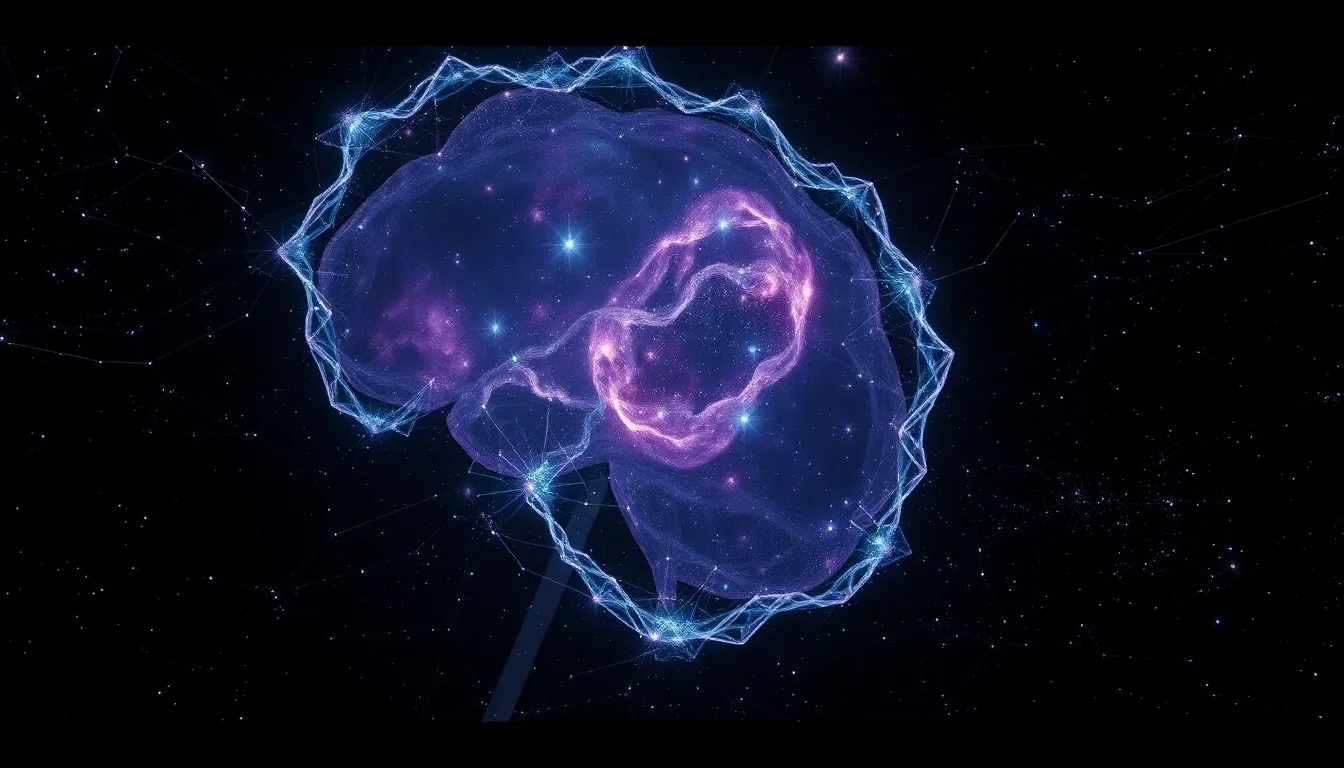
A team of researchers led by Jacob J. Morra at the Max Planck Institute for Biological Cybernetics has developed a new computational framework called OPhELIA that can map brain circuits with far fewer stimulations than previously possible.
The Research
The team, whose work was published in July 2026 on arXiv, focused on all-optical two-photon holographic optogenetics—a technique that uses light to stimulate specific neurons while imaging the brain's activity. Normally, mapping all connections in a brain region requires thousands of trials, each stimulating a different combination of neurons. This is slow, can damage tissue, and generates too much heat.
OPhELIA (Optimal Photostimulation sElection for Iterative Activity maps) is a Bayesian framework that selects the most informative stimulations. It uses a Beta-Bernoulli model to infer connections and an ambiguity-based heuristic to choose the next stimulation. The system also learns from pre-stimulation neural activity to make better guesses.
In computer simulations and real experiments on larval zebrafish (a common model in neuroscience), OPhELIA matched the accuracy of exhaustive mapping using only 5% of the trials. For example, in combinatorial in vivo experiments, OPhELIA with compressed sensing recovered an exhaustive connectome—the full wiring diagram of neural connections—using just 5% of trials. With active learning, it also improved trial efficiency in approximating functional connectomes.
Why It Matters
For anyone curious about how the brain works, this research is a leap forward. It means scientists can map neural circuits more quickly and with less damage to brain tissue. Understanding these connections is key to figuring out how learning, memory, and decision-making happen. For the average person, faster connectome mapping could lead to better brain-computer interfaces and new treatments for brain disorders. While OPhELIA is currently a tool for researchers, its principles—using smart selection to learn more with less effort—are similar to how adaptive IQ tests work, like the one at iqgenio.com.
What You Can Do
You can't use OPhELIA at home, but you can appreciate the concept: your brain learns best when you challenge it with the right tasks. Try mixing up your learning—focus on areas where you're unsure, just as OPhELIA chooses the most ambiguous stimulations.
Source: arXiv q-bio.NC
Curious about your own brain? Take our free adaptive IQ test or try 306 brain training levels.