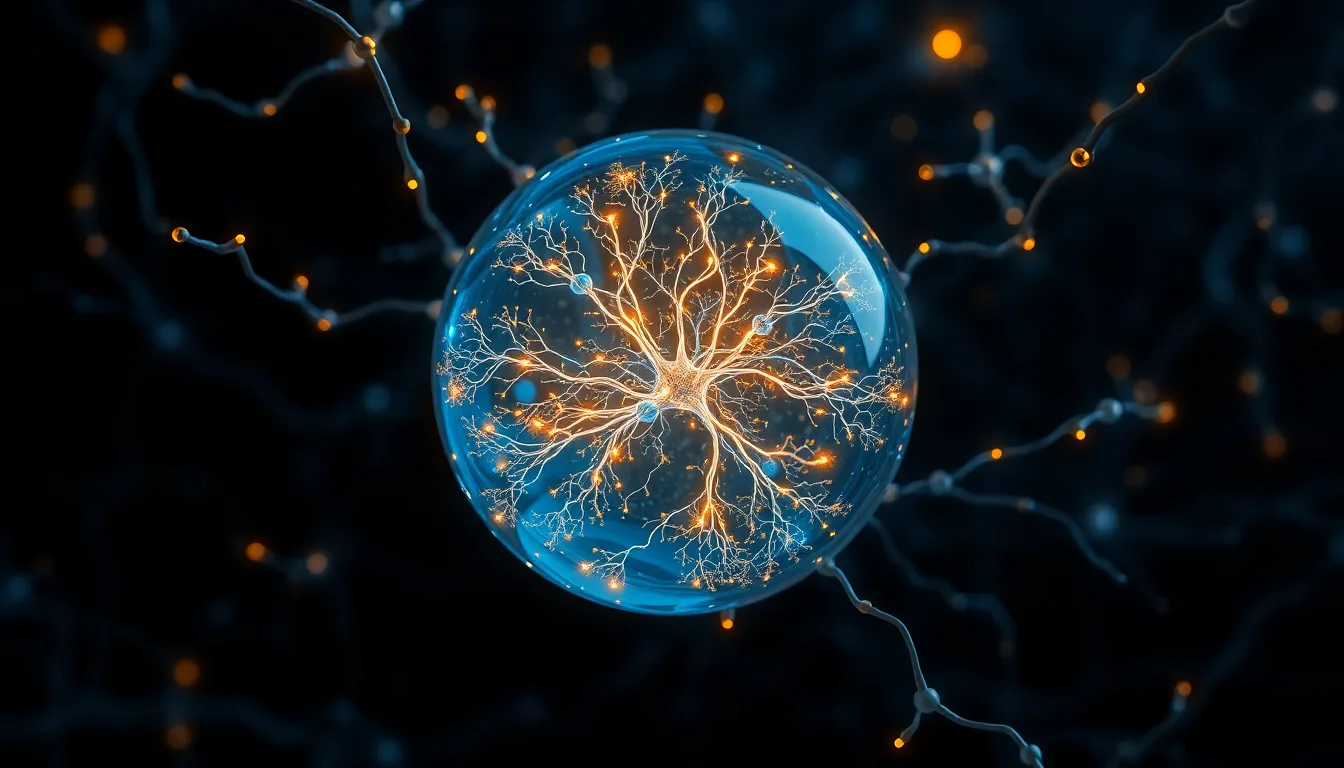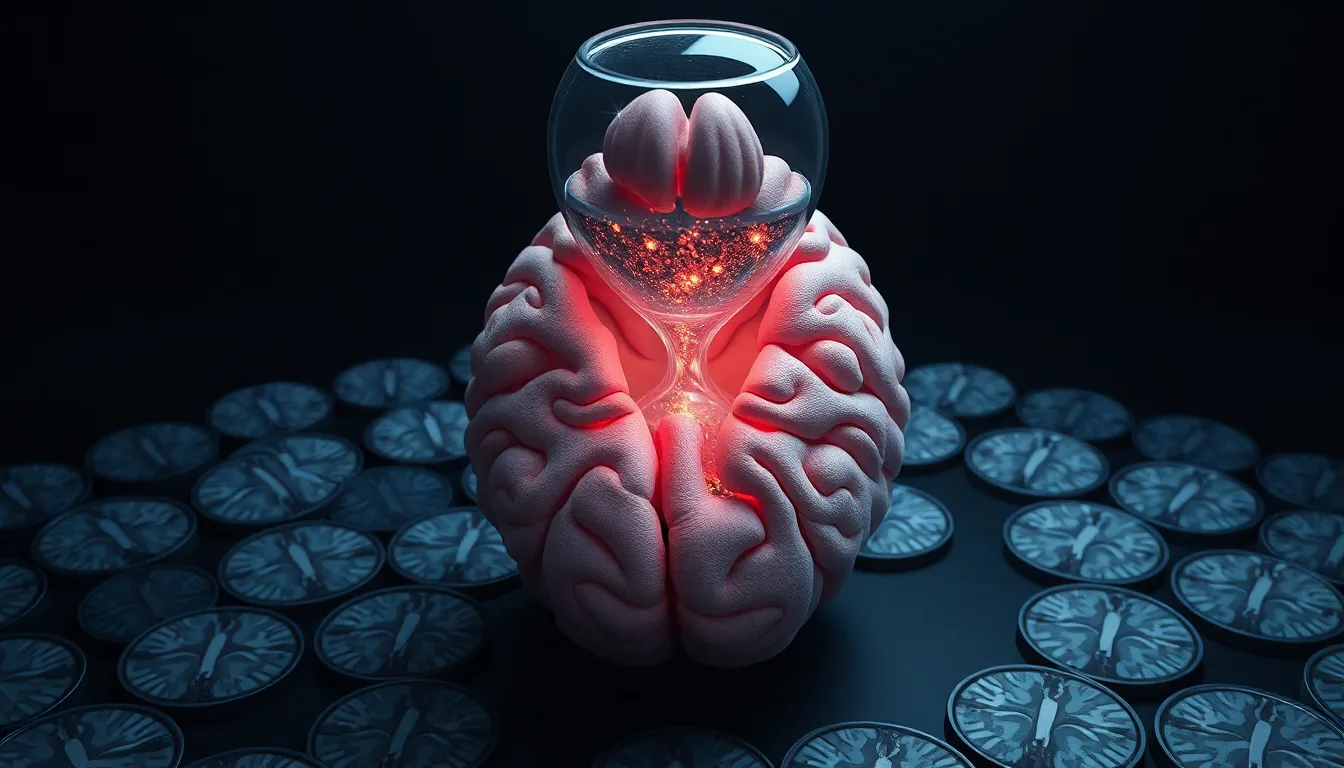
Your brain faces a constant dilemma: what should you remember, and what should you forget? A new computational model from Xin Li (arXiv, 2026) suggests that the answer lies in a Goldilocks zone—neither too detailed nor too vague. The model, applied to neural and immune memory, shows that optimal memory consolidation preserves future-relevant distinctions while discarding irrelevant variation.
The Research
Xin Li, a researcher posting on arXiv (q-bio.NC, paper 2508.11646), developed a framework called 'scaffold-flow memory.' In this view, fast, state-dependent responses are the 'flow,' while slowly changing physical variables form a 'scaffold' that constrains future dynamics. Consolidation writes a predictive coarse-graining—a simplified summary—of experience into that scaffold.
Li tested this idea across three models: a Willshaw associative memory, a metastable neural attractor, and a stochastic affinity-maturation model (mimicking immune memory). In each case, future risk was minimized at an intermediate granularity of memory representation. Overly fine representations wasted capacity and generalized poorly, while overly coarse ones merged situations that required different responses.
The paper quantifies this with a 'leakage' measure, which captures how much information is lost when coarse-graining disrupts the autonomy of the dynamics. Li shows that leakage links directly to excess future error. Importantly, the research also finds that when experience does not self-average—meaning past events don't statistically represent the future—storage of specific details becomes necessary rather than merely efficient.
Why It Matters
This research challenges the common assumption that memory should be as accurate as possible. For your brain, perfect recall isn't the goal; predictive utility is. By discarding irrelevant details, your memory system creates generalizations that help you navigate novel situations—similar to how immune memory recognizes new virus variants based on past exposures.
The findings also explain why some forgetting is adaptive. When you forget the exact color of a car you saw yesterday, you're not malfunctioning; you're optimizing. Your brain is stripping away noise to focus on what matters for future decisions. This perspective could reshape how we understand memory disorders and aging, suggesting that some loss of detail might be a feature, not a bug.
What You Can Do
- Embrace selective forgetting: Don't stress about forgetting trivial facts. Your brain is likely filtering for what’s most relevant.
- Practice active recall: Test yourself on key concepts, not details. This reinforces the coarse-grained, predictive structure of memory.
- Use spaced repetition: Reviewing material at increasing intervals helps your brain consolidate the right level of detail—not too fine, not too coarse.
Source: arXiv q-bio.NC
Curious about your own brain? Take our free adaptive IQ test or try 306 brain training levels.