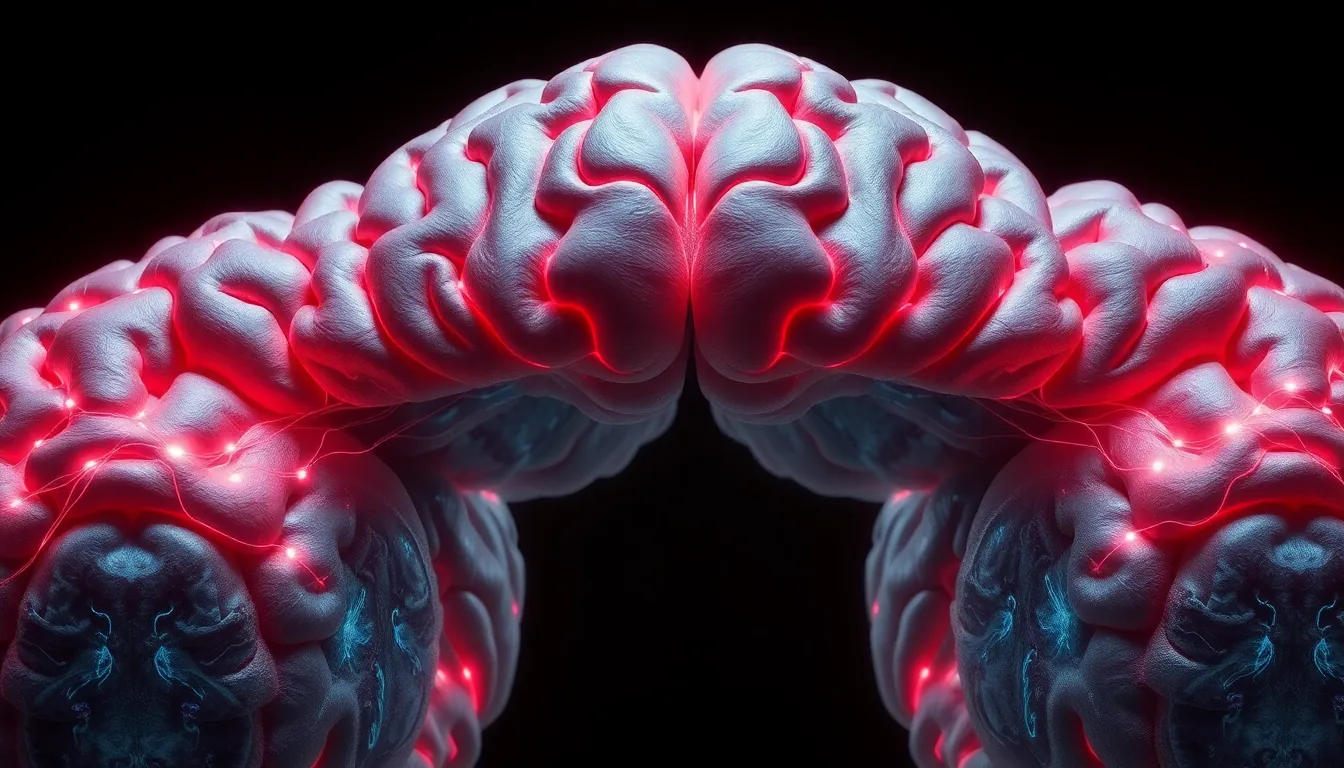
What makes one person more creative than another? A new study from the Paris Brain Institute has identified a specific brain region that acts as a bridge between our spontaneous daydreaming mind and our focused logical thinking. The key to creativity isn't how much these networks overlap, but how distinct and well-connected they are.
The Research
Led by neurologist Victor Altmayer and co-leader Emmanuelle Volle, the study examined 27 patients with behavioral variant frontotemporal dementia and 29 healthy controls. Using functional connectivity gradient analysis, the researchers mapped the rostral prefrontal cortex—located at the very front of the brain. They found that this area serves as a gradual transition zone between the Default Mode Network (DMN), which handles spontaneous associations, and the Executive Control Network (ECN), responsible for goal-oriented thinking.
The functional gradient measures the "distance" between these two networks. In healthy individuals, a larger gradient amplitude predicted higher creativity scores. In dementia patients, this gradient was compressed, meaning their brains lost the differentiation between spontaneous and intentional thought, severely impairing their ability to solve everyday problems creatively.
Why It Matters
This research challenges the old idea that the DMN is only for daydreaming. Instead, it shows the DMN is active during intentional creative work, helping retrieve and reorganize memories to form new ideas. Creativity isn't just for artists—it's a survival tool that helps us adapt to social changes and solve ordinary problems. Understanding this bridge could lead to better therapies for neurodegenerative diseases and new ways to enhance creative thinking.
What You Can Do
To boost your creativity, engage in activities that activate both networks: alternate between focused work (like writing or coding) and open-ended daydreaming (like a walk without a destination). Practicing brainstorming or free association exercises can also strengthen the connection between your DMN and ECN.
Source: Neuroscience News
Curious about your own brain? Take our free adaptive IQ test or try 306 brain training levels.